

RJ45 Snagless boot made out of a soft PVC allowing it to fit to most cables and easy release. The boot is designed to cover the latch so that it does not get caught on cables when removing where other cables are present.
RJ45 Snagless boot made out of a soft PVC allowing it to fit to most cables and easy release. The boot is designed to cover the latch so that it does not get caught on cables when removing where other cables are present.

Straight through inline RJ45 CAT6 coupler with gold flashed contacts for it's anti-corrosive properties.

RJ45 (8P8C) crossover adapter for use with cables with an RJ45 connector, gold flashed pins for anti-corrosive properties.

The UT-870 range are faceplate module kits that come supplied with modules, faceplate and spacers/blanks where needed.
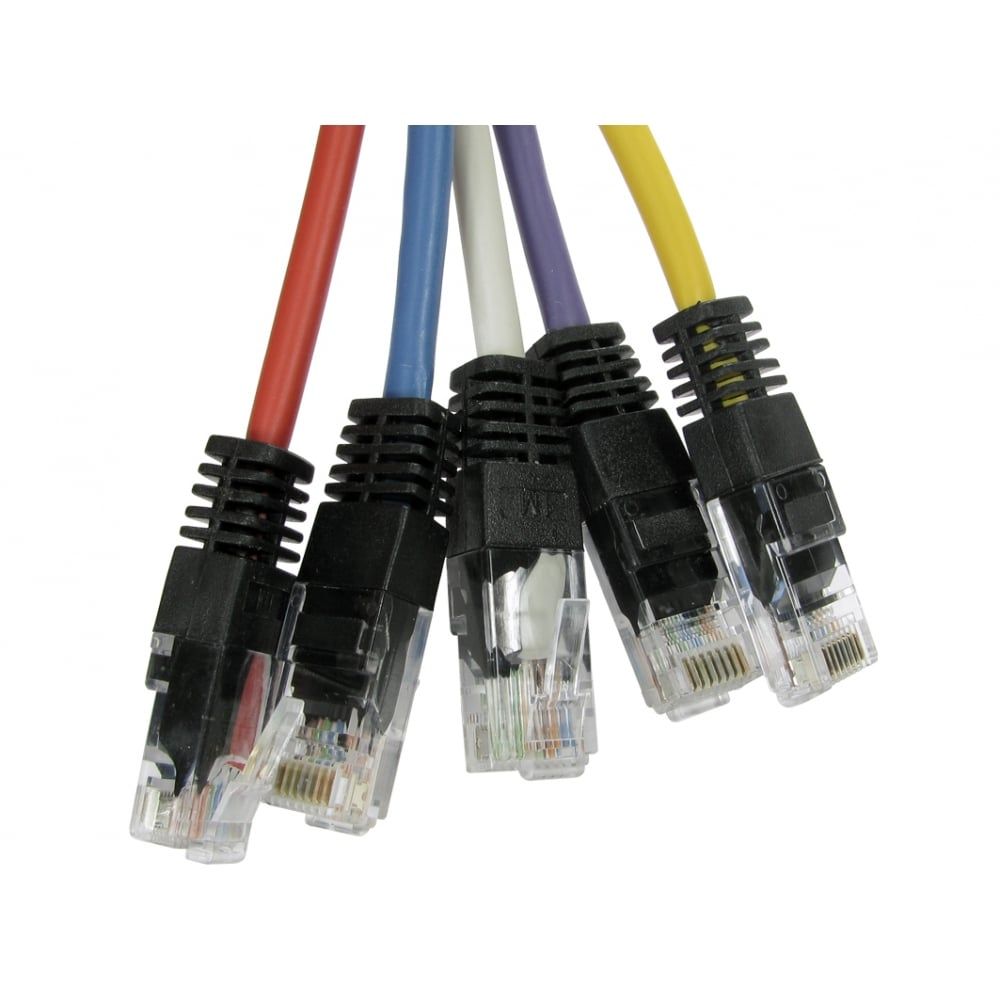
Category 5e cable is a twisted pair high signal integrity cable type often referred to as Cat5e. Most cables are unshielded, relying on the twisted pair design for noise rejection, some are shielded. Often used in computer networks such as Ethernet. Crossover...

Our RJ-ECON DV is an economiser cable that carries two connections over a single port and outputs the same two connections to a different location. This is the perfect solution to adding extra ports to your wall sockets. The DV stands for digital and...

Our RJ-MOD is an economiser cable adapter that carries two connections over a single port and outputs the same two connections to different locations. This is the perfect solution to adding extra ports to your wall sockets. The RJ-MOD only works in pairs...
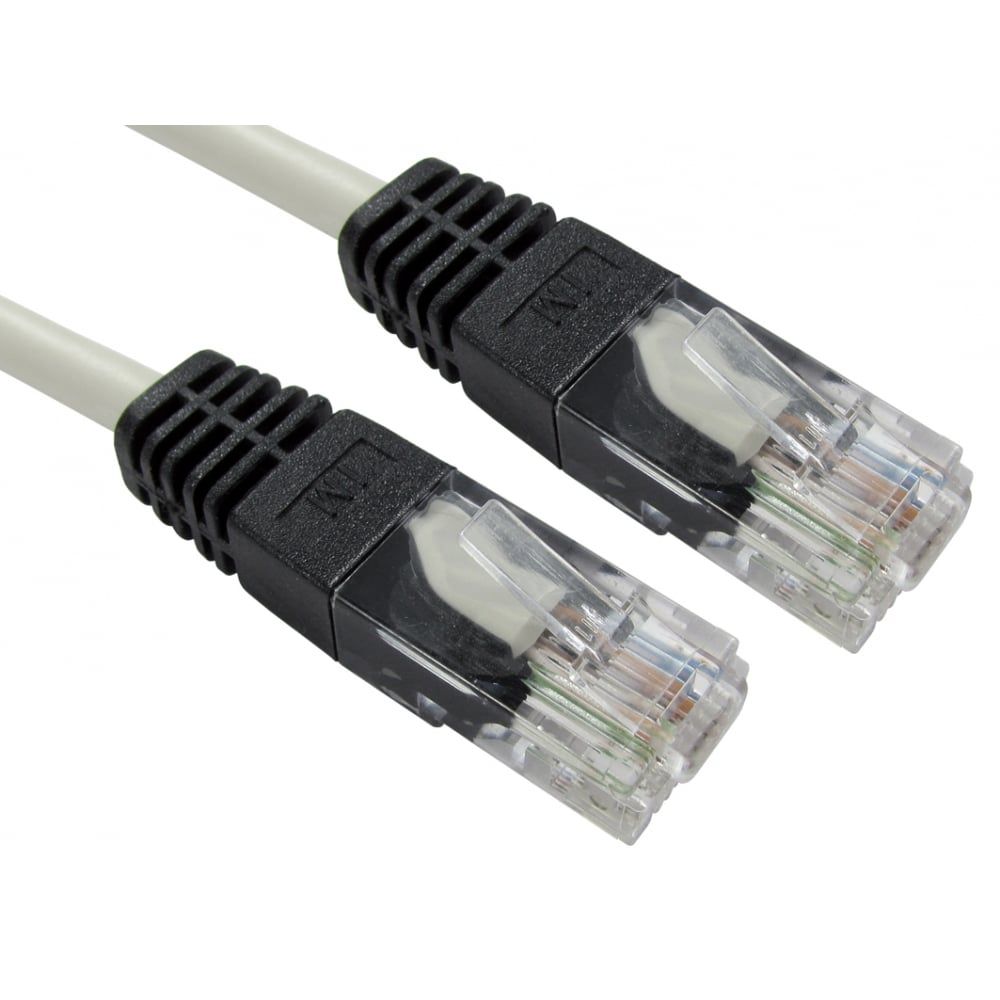
Category 6 cable, commonly referred to as Cat-6, is a cable standard for Gigabit Ethernet and other network protocols that are backward compatible with the Category 5/5e and Category 3 cable standards. Compared with Cat-5 and Cat-5e, Cat-6 features more...

Fibre optic cables use glass threads (fibres) to transmit data. These fibres transmit the data by using modulated light waves. Fibre cables are popular because they have a much greater bandwidth than the standard copper networking cables. The cables have...
|
|